Monday, September 12, 2011

A Hum Dinger: Attracting humminbirds to the native Landscape


Add a delightful element to your landscape and attract hummingbirds. Luring these energetic creatures to the native garden enlivens your yard and provides these winged visitors with a variety of benefits.

"Hummingbirds and the native flora that they feed from and nest in have co-evolved for thousands of years," says Rob Moore of California Native Landscape Design in Brea, California. "Native plants that attract hummingbirds and provide them with the best source for a balanced diet are the flowers, shrubs, and trees that naturally occur along their migration routes and native haunts."

To make your yard a preferred hummingbird dining and nesting spot, Moore suggests a few tips.

Provide quality food sources.  Hummingbirds have to eat twice their body weight in nectar and insects daily, so the ideal menu is important to maintain their energy. Flowers, hummingbirds like dining on include Diplacus species, better known as Monkey flower. All colors are used by hummingbirds, but they seem to prefer the red species such as  Diplacus puniceus, D. rutilus and Mimulus cardinalis. Penstemon spp, such as Scarlet Bugler, Penstemon centranthifolius, are preferred by hummingbirds as well.

Trees and shrubs favored by hummingbirds include Sambucus Elderberry, Arctostaphylos spp.. Manzanita and Ceanothus are popular examples.

Choose red and orange tubular-shaped flowers whenever possible. Hummers flock to red flowers, which tend to be overlooked by insect pollinators who fail to see this color clearly according to scientists.

When choosing plants focus on variety of species. Hummingbirds prefer a mixed diet of nectar from multiple sources for their daily diet. Arrange and locate plants throughout your property with species that bloom at different times and that are in eye-shot of places you enjoy viewing the garden.

Provide water. Hummingbirds especially like bird baths that drip or recirculate and will hover and sip the flowing water. They will also perch on the edge and drink as other birds do. The sound of running water is like a magnet to humming birds and other species such as goldfinches. Additionally, it will add the soothing and relaxing element of sound to your landscape.

Keep snags and introduce deadwood. Both provide food, shelter, and nesting places for many birds, and other garden friendly critters. For example hummingbirds, most often perch on dead limbs rather than living ones, and decomposing deadwood provides added food sources. 

– Julie Bawden Davis

Master Gardener Julie Bawden Davis is author of "Indoor Gardening the Organic Way" (Taylor Trade, 2007).

Excerpted from Wildflower, the Magazine of the Lady Bird Johnson Wildflower Center University of Texas at Austin

Wednesday, July 13, 2011

Plant Selection: California Native Plant Communities


When designing a California native garden, plant selection is probably the one aspect people find most exciting – and daunting! At this juncture it’s good to pause and consider questions such as “What plant community do I live in?” and “How do I go about identifying this community?” This step requires one to look at the design process from a different perspective—that of emulating the natural ecosystem or plant community that existed prior to the development of the home and neighborhood where the garden is to be developed. Identifying this natural ecosystem is the first step in the plant selection process.

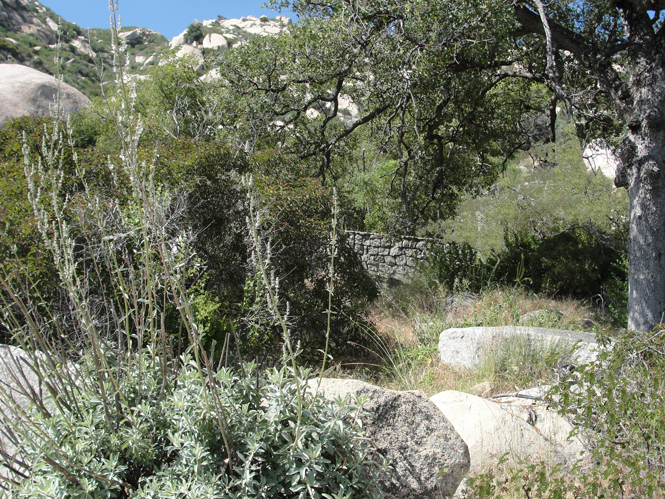
Generally speaking, most of the densely populated areas in California (primarily those in the southern part of the state) are located in the coastal sage scrub plant community. Inland areas in southern California such as Riverside and San Bernardino have their own version of this plant community referred to as interior, or Riversidian sage scrub. There are many other specific climates to be considered depending upon where in California you live. Examples include northern oak woodland, northern juniper woodland, central oak woodland, yellow pine forest, Douglas Fir forest, valley grassland, and Great Basin sage, to name a few.

Look around the neighborhood where the garden is to be designed, and take note of areas that haven’t been developed. Do stands of intact native plant groups still occur naturally? Note what plants are growing there, and how they grow together. Another clue is to look for native plant volunteers popping up in people’s ornamental landscapes. These indicator plants offer insight as to what will easily grow in your particular neighborhood.

If you live in an area where no natural areas exist and native plant volunteers are not obvious, there are other resources available. Las Pilitas Nursery has a website where you can enter your zip code, locate the plant community associated with it, and find links to plants that occur naturally in that specific region.

Tree of Life Nursery’s website is a valuable resource as well. In particular, their series Sage Advice “The California Garden” (located under Resources/Sage Advice) is an excellent source from which to choose plants based on California native plant communities.

Take a tip from Mother Nature, make California's native plant communities the starting point when choosing plants for your new garden!

Sunday, May 22, 2011

Water Conservation Equals Energy Conservation!


Most Californians understand that swelling populations in the southwest are and will continue to outpace water supply both from the California State Water Project sources and the Colorado River.

Additionally, Golden state residents are learning that water-wise habits in our landscape and gardens can save up to 60 percent of this precious resource. But something many folks aren’t aware of is that there is another compelling reason to reduce excessive water usage: energy conservation.  

The California State Water Project is the largest state-built water and power development and conveyance system in the nation. It includes facilities—pumping and power plants; reservoirs, lakes, and storage tanks; and canals, tunnels, and pipelines—that capture, store, and convey water to 29 water agencies from one end of the state to the other.

The SWP’s watershed begins in the mountains and waterways around the Feather River and Lake Oroville areas north of Sacramento. It continues south through a multitude of conveyance systems and pumping stations finally terminating in the southern most point at Lake Perris in Riverside county. 

Pumping (moving) and treating this water is incredibly energy-intensive! For example, the state water project, with its big pumps that move water over the Tehachapi Mountains to Southern California, is the state’s single biggest user of electricity!

With this in mind we as consumers of this water can make smarter, more informed choices. Collectively we can have a powerful impact on energy consumption in our state. 

How so you may ask? It’s simple, outdated energy-use habits associated with water use from our landscapes and gardens combined with our home appliances such as dishwashers, hot water heaters, and laundry machines — add up to a lot of unnecessary pollution and waste. The California Energy Commission estimates that twenty percent of our state’s electricity is associated with water use, mostly by urban customers.

We all can do our part to reduce excessive water usage with very little effort and lifestyle change.  Turn your tap off whenever possible, upgrade that inefficient water heater or dishwasher when it is at the end of its useful life and install water-wise landscapes and gardens

Remember that adopting smart water-use habits is an easy way that every one of us can have a direct, positive impact on our environment statewide and with a modicum of effort we all can conserve our most precious resources!

Saturday, May 7, 2011

Sowing California Native Wildflowers


Late autumn is a great time to sow next spring’s annual California wildflower crop in your home garden. California’s indigenous people utilized our native annual seeds as a food staple for thousands of years. Along with other sources of sustenance such as the acorns of our local oaks, California’s wildflower seeds were ground in mortar pits and used as a regular food source called Pinole.
Today, as forward-thinking gardeners we can take a page out of history and continue the tradition of sowing seeds of the many different varieties of wildflowers available. Doing so requires little effort and will reward you with an abundance of annual beauty year after year. 

Start by choosing varieties that naturally occur in the plant community you live in. Not sure which community? Learn more here: California native plant communities

Next, find a reputable source such as Larner Seeds or Tree of Life Nursery and order a packet of seed mix that is appropriate for your property’s micro-climate.

Follow this link for step by step planting instructions for California native wildflowers

Tuesday, April 26, 2011

Plant Profile: Vitis californica ‘Roger’s Red’


Vitis californica ‘Roger’s Red’ is a fast growing native grape vine discovered by Roger Raiche.  Although previously considered a cultivar this plant is now considered to be a natural occurring hybrid between the native Vitis californica and the European wine grape Vitis vinifera.

Like its European counter-parts this grape vine is a vigorous climber (spreader) and can meander up a trellis quickly creating a screen to hide a bare wall or fence. This plant has large green oval shaped leaves, tendrils, and produces edible clusters of small grapes in late summer. The fruit is seedy, but makes a tasty juice and is a great habitat plant for birds! This Vitis is also adaptable to a variety of soil and watering regimes as well as sun/shade micro-climate exposures. Just make sure you have plenty of space as it can easily spread to 30+ feet.

Vitis californica ‘Roger’s Red’ is my choice for planting in narrow beds next to walls and fences. Couple with a rock, a Rush and/or riparian variety of California native bunch grass for an interesting plant grouping. The aforementioned attributes, combined with it’s cool, flaky cinnamon colored bark, and the fact you can make jelly, juice and even wine from the fruit makes this Vitis a perfect addition to the California native garden!

Wednesday, March 23, 2011

Plant Profile: Nemophila menziesii Baby Blue Eyes


Nemophila menziesii Baby Blue Eyes get their name from bright blue flowers dotted with black on white centers. Found virtually throughout the state in a diverse setting of  California plant communities such as meadows, grasslands, chaparral, woodlands, slopes, and desert washes; Nemophila menziesii is an endemic California wildflower, attractive to bees, butterflies and birds making them an excellent addition to the California native garden.

They are freely self-sowing if planted in a mulch-free environment and are suitable for growing in containers. Typically, Baby Blue Eyes are early bloomers (mid-winter) and have a growth habit under 1 ft in height/width with average water needs. Growing happily in USDA Plant Hardiness Zones 3-10, Nemophila menziesii prefer light soils and dry conditions, but are adaptable and make an excellent front of border plant.

Sow seeds of this California native in full sun on the coast transitioning to filtered sun/part shade inland. Group them with taller-growing spring bloomers such as Layia platyglossa Tidy Tips, Lupinus succulentus Arroyo Lupine, Gilia capitata Globe Gilia and late blooming wildflowers such as Clarkia amoena Farewell-to-Spring for a long-lasting show of California native annuals!

Sunday, March 13, 2011

Theodore Payne: the Man, the Vision, the Legacy


Theodore Payne, arguably known today as the father of California’s native plant movement, was introduced to California native plants at The Royal Botanic Gardens at Kew in England in 1891.

Born in Northamptonshire, England on June 19, 1872 a young Theodore Payne began his career serving an apprenticeship in horticulture for J. Cheal and Sons, a nursery firm in London. After three years, in 1893, Payne completed his contract and traveled to the United States.

Arriving in New York, he traveled to Chicago and visited the World's Columbian Exhibition, shortly thereafter setting out for Los Angeles, California. After arriving in Southern California, he took work picking apricots, before finding a job overseeing the gardens on the ranch of Madame Helena Modjeska in Santiago Canyon. Nestled into the Santa Ana Mountain range in Orange County, it was there that he began his life-long interest in California native plants, exploring the extensive natural areas surrounding the Ranch.

Even in the early years of the 20th century, native vegetation was being lost to agriculture, housing, and ever-increasing construction of infrastructure. Recognizing this was happening at an alarming rate, Theodore Payne began advocating for the use of California native plants in place of the standard fare of exotic species being pushed by the California Dept. of Forestry. He lectured up and down the state on the importance of preserving wild flowers and landscapes native to California, and the preservation of native habitat.

Read more about Theodore Payne’s enduring legacy preserving California’s native plants!

Plan on attending the Eighth Annual Theodore Payne Garden Tour April 9th and 10th 10-4!