Friday, June 29, 2012

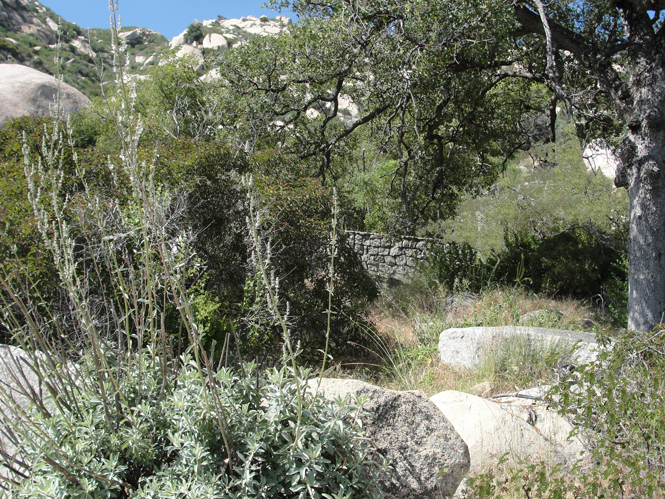
Profile: Chino Hills State Park


Being a resident of Southern California has its perks. World-class beaches, soaring mountain peaks and living in one of the world's five Mediterranean climates are a few of the obvious. One of the lesser appreciated aspects is the relative abundance of natural areas and open spaces. I’m specifically talking about an area near and dear to my heart, Chino Hills State Park. 

For those of us who advocate for native plants and wildlife gardens familiarizing ourselves with our local ecosystems is key to deeper understanding. The last time I found myself exploring the area it dawned on me that it might be both fun and insightful to write a series of blogs exploring some of the many aspects that make up a natural area in this little corner of the world. Insights that can be utilized in many ways by people who understand the importance of what Mother Nature has to teach.

Originally the area now encompassed by CHSP was inhabited by the Gabrielino Indians. The indigenous people utilized the area for hunting game, gathering acorns and elderberries, walnuts, seeds and for other sources for food and shelter. 

Once the Europeans arrived and founded Mission San Gabriel in 1771 the Chino Hills were used extensively for grazing by mission cattle. During the Mexican republic the park was also utilized for grazing by surrounding Mexican ranchos Santa Ana Del Chino and La Sierra Yorba. Cattle use continued until the 1970’s until finally in 1984 State Parks and Recreation officially declared the area a part of the state park system.

Today CHSP is considered a premier natural open space containing over sixty miles of fire roads and trails. The Park’s 14,100 acres contain prime real estate from the counties of Los Angeles, San Bernardino, Riverside and Orange.  

Additionally the area provides an anchor parcel for the PuenteHills Wildlife Corridor, a vital natural resource to an extraordinary diversity of animals and plant life.

Fortunately for me the western most entrance to the park is a mere 10 minute drive from my home in Brea. In an on-going effort to educate and advocate both for myself and the public, I have made it a priority to spend more time exploring the area’s diverse plant and animal life.

Although primarily consisting of rolling grasslands made up of invasive European species, many native plant species still exist in the park. Stands of trees, shrubs, perennials, and annual plant species combine to make up the parks abundant and diverse flora. 

Several plant communities serve as the foundation of life in the park. They include coastal and alluvial sage scrub, riparian, southern oakwoodland, and mixed chaparral. Micro-communities exist within the latter two plant communities boasting the rare and endangered species Juglans californica southern California black walnut and Cupressus forbesii Tecate cypress respectively. 

Chino Hills State park is not unlike our native plant wildlife gardens in that it is a relatively tiny microcosm of habitat surrounded by a sea of urban sprawl. It is in a continual state of both restoration and preservation supporting nature as she plays out her natural rhythms as they have occurred for millennia.  

Those of us who advocate for the native garden and wildlife owe it to ourselves to support, explore, learn and pass on the information we acquire about our native open spaces. In doing so we insure that future generations will be inspired and continue to be stewards of the lands we’ve inherited.

Monday, May 14, 2012

The Meadow Garden


A type of wildlife friendly landscape that is attracting a lot of attention these days is the meadow garden. Even though this style of garden is considered one of the most beneficial it is also the most informal. There are key points one should take into account before jumping in with both feet.

One of the main considerations is maintenance. Unlike other styles of native gardens, the meadow garden requires regular attention during the establishment phase. In order to achieve optimum seed germination, seed to soil contact is very important. This can present a challenge in that most other types of native gardens in California are finished off with a thick layer of mulch or to a lesser degree DG (decomposed granite).

Both of these finish materials provide weed suppression and a thick insulation blanket for moisture retention. This issue is a key challenge with this particular style of landscape. Because seed to soil contact is a critical component, using mulch as a finish option can be tricky.  Additionally, DG typically doesn’t provide the degree of naturally occurring soil nutrients wildflowers prefer without augmentation. What this translates into is regular and copious amounts of hand weeding and supplemental irrigation.

Another key component is seasonal dormancy. To the degree that the meadow garden is informal means that from an aesthetic perspective it may not be an appropriate choice for the front yard of a suburban home. Typically these gardens work well in rear yards where they can be left to the natural ebb and flow of nature's processes. They lend themselves well to areas where wildlife can interact in ways that Mother Nature intended within the wild spaces of rural areas.

The ideal condition for birds, butterflies, and insects is an environment that is allowed to move completely through its natural cycle of decomposition, rebirth and maturity. All of the aforementioned critters prefer 'messy areas' where these natural rhythms are in the process of playing out.

With this said, the first step forward into a meadow garden begins with site prep. In my rear yard for example after deciding to turn off the irrigation, I observed as the old lawn began to slowly deteriorate. Due to household budget constraints and competing visions of how the space would be developed, I decided to move ahead with a meadow garden in the interim until such time as I could develop a formal plan.

Facing the daunting task of turf grass removal, I opted to leave some existing grasses in place; basically the species that survived the new watering regime and that were growing in areas that suited my aesthetic sensibilities. The rest of the areas were raked out to make way for wildflower seeding and native plants indigenous to the wild areas surrounding my neighborhood. I chose as well to include cultivars.

Unlike traditional turf, meadows have many different types of grasses each with varying heights, bloom times and colors. For my meadow I chose several species including Bouteloua gracilis Blue Grama, Deschampsia caespitosa Tufted Hairgrass, Melica imperfecta Coast Range Melic, Muhlenbergia rigens Deergrass, Nassella cernua Nodding Needlegrass,  N. lepida Foothill Needlegrass, N. pulchra Purple Needlegrass, Elymus glaucus Blue Wildrye, Festuca californica, and Festuca rubra ‘Patrick’s Point’. Included as well were some popular grass-like species such as Sisyrinchium bellum Blue-Eyed Grass, Carex pansa California Meadow Sedge, and Carex tumulicola Berkley Sedge.

California state grasslands naturally consist of bunchgrasses spaced apart with open areas between them where annual wildflowers fill in. Additionally, flowering shrubs can be found mixed in and at perimeters. I followed this method when placing woody plants such as Eriogonum, Salvia, Monardella, and other flowering shrubs including  Aster chilensis and Lessingia californica Carmel Aster.

Seeds of wildflowers were then sown including Nemophila menziesii Baby Blue Eyes, Clarkia amoena and C. unguiculata Mountain Garland, Gilia capitata Globe Gilia, Salvia columbariae Chia, Collinsia heterophylla Chinese Houses, Lupinus succulentus, Calandrinia ciliate, Claytonia perfoliata, Layia platyglossa, and two selected forms of Eschscholzia californica California Poppy, 'Carmine King Poppy' and 'White Linen'.

Many of these wildflowers have tall and wiry stems allowing them to seamlessly blend into the surrounding grasses. Of course a select piece of dead wood had to be included as a finishing touch to create additional habitat while simultaneously providing food, shelter, and nesting places for birds and other garden-friendly critters.

With all the aforementioned information taken into account, appropriate site conditions, and if the extra work required doesn’t intimidate you, a meadow garden is a wonderful way to create a small slice of natural heaven right in your own little corner of suburbia.


Monday, January 30, 2012

Hardscapes and Their Role in the Native Garden


When people think of creating a native garden the first things that typically come to mind are plants.  Images of favorite varieties pop up in the mind’s eye along with characteristic flower color, aroma, foliage texture and ability to attract one’s favorite garden-friendly wildlife. Rounding out the idyllic vision is how said plant material will fill in the space putting the final touch on the mental image of a dream garden.

These are exciting aspects that all of us who enjoy gardening look forward to and spend many hours ruminating on. Yet there is a critical step that precedes this vision, one that requires careful attention that is often overlooked. That aspect is hardscape.

Hardscape is the physical foundation that your new native landscape will be built on. In the native garden the hardscape is every bit as important as the plant material that is eventually chosen. It is equal part aesthetic and functional and is intrinsic to a successful wildlife garden.

Elements like paths, and mounds–whether the topography will be flat or rolling, swales and/or dry creek beds; rocks, boulders, and even snags and mulch, all play a critical role in a functional, healthy, and aesthetic pleasing, natural landscape.

For example, consider what looks good to your eye when out walking in nature. Usually when a person stumbles upon that ‘Kodak moment’, a combination of the aforementioned working together with plant material creates the image that is aesthetically pleasing.

Paths are the access routes deciding traffic patterns around the home and through the garden. They serve both an aesthetic and utilitarian purpose. Paths created with permeable surface materials such as DG (decomposed granite) lend more to a casual, natural feel when compared to traditional concrete. Inlaid flagstone, pavers or decorative gravel can add more of a formal style to the natural garden. Consider which camp your overall vision falls into prior to choosing paving materials.

Mounded soil in the landscape creates vertical interest, employs the principle of
focalization, and evokes curiosity in the eye of the person viewing the garden. It
invites one to explore the paths that flow between the varying elevations and
curve out of the line of site. Creating an undulating foundation emulates the natural topography of our native landscapes with their rolling hills, canyons, and valleys.

There are functional aspects to consider as well. Perhaps you have poorly draining clay or compacted soil on site. By mounding existing soil one can now include plants that require better drainage.  In addition, mitigating the environmental impact of the project by reusing excavated soil and retaining existing materials on-site is important and follows right in line with an eco-friendly landscape design.

Snags, and dead wood create habitat and beauty in the natural garden. They provide critical habitat as well providing food, shelter, and nesting places for many birds and other garden-friendly critters. Perhaps you’ve noticed that hummingbirds, phoebes and other birds usually perch on dead limbs as opposed to ones that are foliated? Deadwood provides insect-eating birds with added food sources and can double as garden sculpture and/or eco-art.

Tuck a piece between a rock and a naturally occurring plant group. Leave a little open space around it for wildflowers to pop up through in the spring. An old piece of driftwood looks great in a dry creek bed or pond as well. Find one that resonates with your eye and place it according to taste.

Consider including water in the plans. Water will provide an important resource to wildlife and not only attract birds, but will also keep your garden lively with a variety of butterflies and other beneficial backyard critters. Put rocks or stones in birdbaths to give butterflies and birds a supportive landing area.

Utilizing rocks, boulders & cobble in your design is beneficial aesthetically as well as
functionally. I can remember hiking as a kid and turning over a pretty good sized
granite boulder, noticing all the life forms living underneath. Even though it was
the middle of summer and there hadn’t been rain for months, the imprint provided a cool, moist micro-climate.

Not only do rocks in the landscape provide a beneficial micro-climate for good
garden bugs and your plants, from a design perspective they offer transition between the architecture of your home and garden. In addition native plants typically don’t get a lot of water during the hot months. By including a decent sized rock strategically placed within a plant grouping (like you would see in nature) a lasting source of moisture is provided assisting plants through extended dry periods.

Unlike traditional landscape design which is typically based on physical appearance of plant material, native garden design should be approached from a broader perspective. When planning your wildlife-friendly garden, consider how the plants and hardscape elements will work together as opposed to individually.

Emulating the relationship plants and hardscapes share will give your garden the look of authenticity. It will provide a solid foundation that will all but ensure a long-lived natural landscape that will thrive and evolve into a ecologically balanced example that can be enjoyed by all.

Sunday, December 25, 2011

It Must be Christmas: California Christmas Berry


This time of year always brings fond memories for me. As a child, upon arrival at my grandparents’ house on Christmas day I would see a large wreath hung on the front door. The wreath was aromatic and made up of cedar, small pine cones and, of course, English holly. Or was it?

As I look back now the latter may not have been holly at all. Taking into account my grandpa and great-uncle Bert’s interest in San Diego’s back country, it could very well have been created from a local favorite found in the foothills and mountains where my great-uncle had a cabin. The favorite I’m referencing was Heteromeles arbutifolia (Toyon) also known as Christmas Berry.

Heteromeles arbutifolia is a dicot, a shrub native to California occurring only slightly beyond our state’s borders. An extremely diverse plant, Christmas Berry is found in forty-five of California’s fifty-eight counties. A large evergreen shrub/small tree typically growing from eight ft. high and wide but known to grow to twenty ft. where growth conditions are optimal. 

Because the first European settlers in Southern California thought the leaves and berries resembled English holly, coupled with the fact the species grew so abundantly in the area of what is now Hollywood, it is believed that the infamous city received its namesake from the plant.

In fact, it is said that the berries were so popular for use in Christmas decorations that a law was passed in the 1920’s making it illegal to pick the branches on public land!

Prior to the arrival of the first Anglo inhabitants, local Native American tribes, such as  Chumash, Tongva, and Tataviam, utilized the berries of Christmas Berry as a food source. They made tea from the leaves which served as a stomach remedy.  These leaves were also dried, stored and cooked as porridge or pancakes. Later settlers made the berries into a jelly also adding sugar to make custard and wine.  The berries are known today to contain small amounts of cyanide but these compounds volatize off after being cooked, leaving a flavor reminiscent of cherry.

Fast forward to today. Heteromeles is a very hardy and drought tolerant plant for the native garden.  It’s tolerant of most soil types; summer irrigation also makes it fire resistant by keeping the plant lightly hydrated during spring and summer. In addition, it is versatile—growing in the shade of mixed forest and oak woodland plant communities. Thriving in full sun from coastal sage scrub to inland chaparral, Christmas Berry looks great pruned up as a stand-alone specimen plant, as a hedge, or grouped with manzanita, Rhus integrifolia, Rhamnus spp., deer grass and Ceanothus.

Toyon’s signature red berry clusters appear in winter, but they start in spring as small white five-petaled flowers that attract butterflies and have a spicy odor similar to Hawthorn. Toyon also qualifies as a habitat plant attracting a variety of birds—including cedar waxwings, quail,  towhees, western bluebird, robins, mockingbirds and native band-tailed pigeons.

Regardless of what one calls it, be it Heteromeles, Toyon, or Christmas Berry, for me it will always be a reminder of the holly wreath on my grandparents’ front door that meant only one thing—it must be Christmas! 

Wednesday, December 7, 2011

Native Plants, Healthy Diet?


In the 1960’s and 70's my father extolled the virtues of the natural food movement popularized by the  generation. Even though at the time I didn’t appreciate the benefits of eating a healthy diet, that soon changed as my palate began to mature with the onset of adulthood.

During those exploratory years I read that people questioning the right diet for themselves could look to the region where they grew up. Refining the idea further, they could also consider areas that 'resonated as home’. The philosophy professed that one’s ideal diet would emulate that which native peoples of that particular region would have eaten. 

At the time I discovered this philosophy I was living in Utah. I began to ponder what my ’home region’ diet would consist of. Hailing from Southern California, it dawned on me that the ideal regional diet for myself would be native Californian, hence California Cuisine.

Upon further research, I realized that California Cuisine was made up of mostly exotic foods endemic to the other four Mediterranean climates. The ideal diet I was seeking would consist of authentic California Cuisine. These sources of sustenance would occur naturally in the mountains, foothills, valleys and coast line of California. I began to ponder that which the indigenous people of California would have included in their diet.

Prior to the arrival of Europeans, the incredibly diverse flora and fauna of California supported fifty two tribes of aboriginal people, the largest population of all the states in the union. Along with traditional lean meats acquired from hunting deer, rabbit, foul and seafood, the original California Cuisine was made up of grains, fruits, acorns, shrubs, succulents, forbs, and the seeds of native grasses and wildflowers.

Today forward-thinking Californians are beginning to realize that they can enjoy the health benefits of authentic California Cuisine right in their own backyards.  There are many plant species available that not only provide aesthetic interest, water savings, and habitat restoration, but provide the very food sources that the indigenous inhabitants included in their healthy and tasteful diets. These plants are easy to grow and make a tasty and interesting addition to the contemporary balanced diet.

As a garden designer specializing in California’s native flora, people often ask my opinion with regard to the ethno-botanical aspect of native plants. Ultimately, site conditions of your home garden will dictate which plants work best, but popular examples of plants that will tempt your taste buds include Miner’s Lettuce (Claytonia perfoliata), Mexican Elderberry (Sambucus mexicana), California Grape (Vitis californica). Seeds of Blue Wildrye (Elymus glaucus), Red Maids (Calandrinia ciliate), Tidy-tips (Layia platyglossa), Goldfields (Lasthenia glabrata) and  Chia (Saliva spp.). Other common favorites for the native garden include Buckwheat (Eriogonum spp.), Artemisia spp., Prunus illicifolia, Ceanothus spp., Purple Needlegrass (Nassella pulchra).

There is so much more than meets the eye in the native garden. We can take a cue from our four-legged and feathered friends as well as our states’ indigenous inhabitants. Look a little deeper and discover some of the nutritious and delicious foods that have been hiding in plain sight, right in our own backyards!

Monday, September 12, 2011

A Hum Dinger: Attracting humminbirds to the native Landscape


Add a delightful element to your landscape and attract hummingbirds. Luring these energetic creatures to the native garden enlivens your yard and provides these winged visitors with a variety of benefits.

"Hummingbirds and the native flora that they feed from and nest in have co-evolved for thousands of years," says Rob Moore of California Native Landscape Design in Brea, California. "Native plants that attract hummingbirds and provide them with the best source for a balanced diet are the flowers, shrubs, and trees that naturally occur along their migration routes and native haunts."

To make your yard a preferred hummingbird dining and nesting spot, Moore suggests a few tips.

Provide quality food sources.  Hummingbirds have to eat twice their body weight in nectar and insects daily, so the ideal menu is important to maintain their energy. Flowers, hummingbirds like dining on include Diplacus species, better known as Monkey flower. All colors are used by hummingbirds, but they seem to prefer the red species such as  Diplacus puniceus, D. rutilus and Mimulus cardinalis. Penstemon spp, such as Scarlet Bugler, Penstemon centranthifolius, are preferred by hummingbirds as well.

Trees and shrubs favored by hummingbirds include Sambucus Elderberry, Arctostaphylos spp.. Manzanita and Ceanothus are popular examples.

Choose red and orange tubular-shaped flowers whenever possible. Hummers flock to red flowers, which tend to be overlooked by insect pollinators who fail to see this color clearly according to scientists.

When choosing plants focus on variety of species. Hummingbirds prefer a mixed diet of nectar from multiple sources for their daily diet. Arrange and locate plants throughout your property with species that bloom at different times and that are in eye-shot of places you enjoy viewing the garden.

Provide water. Hummingbirds especially like bird baths that drip or recirculate and will hover and sip the flowing water. They will also perch on the edge and drink as other birds do. The sound of running water is like a magnet to humming birds and other species such as goldfinches. Additionally, it will add the soothing and relaxing element of sound to your landscape.

Keep snags and introduce deadwood. Both provide food, shelter, and nesting places for many birds, and other garden friendly critters. For example hummingbirds, most often perch on dead limbs rather than living ones, and decomposing deadwood provides added food sources. 

– Julie Bawden Davis

Master Gardener Julie Bawden Davis is author of "Indoor Gardening the Organic Way" (Taylor Trade, 2007).

Excerpted from Wildflower, the Magazine of the Lady Bird Johnson Wildflower Center University of Texas at Austin

Wednesday, July 13, 2011

Plant Selection: California Native Plant Communities


When designing a California native garden, plant selection is probably the one aspect people find most exciting – and daunting! At this juncture it’s good to pause and consider questions such as “What plant community do I live in?” and “How do I go about identifying this community?” This step requires one to look at the design process from a different perspective—that of emulating the natural ecosystem or plant community that existed prior to the development of the home and neighborhood where the garden is to be developed. Identifying this natural ecosystem is the first step in the plant selection process.

Generally speaking, most of the densely populated areas in California (primarily those in the southern part of the state) are located in the coastal sage scrub plant community. Inland areas in southern California such as Riverside and San Bernardino have their own version of this plant community referred to as interior, or Riversidian sage scrub. There are many other specific climates to be considered depending upon where in California you live. Examples include northern oak woodland, northern juniper woodland, central oak woodland, yellow pine forest, Douglas Fir forest, valley grassland, and Great Basin sage, to name a few.

Look around the neighborhood where the garden is to be designed, and take note of areas that haven’t been developed. Do stands of intact native plant groups still occur naturally? Note what plants are growing there, and how they grow together. Another clue is to look for native plant volunteers popping up in people’s ornamental landscapes. These indicator plants offer insight as to what will easily grow in your particular neighborhood.

If you live in an area where no natural areas exist and native plant volunteers are not obvious, there are other resources available. Las Pilitas Nursery has a website where you can enter your zip code, locate the plant community associated with it, and find links to plants that occur naturally in that specific region.

Tree of Life Nursery’s website is a valuable resource as well. In particular, their series Sage Advice “The California Garden” (located under Resources/Sage Advice) is an excellent source from which to choose plants based on California native plant communities.

Take a tip from Mother Nature, make California's native plant communities the starting point when choosing plants for your new garden!